

Sleeping with the lights on can make it harder to fall asleep and easier to wake during the night, because light is one of the cues your body uses to tell day from night. You do not need a perfectly sealed cave, though. The practical goal is to make the hours before bed dimmer, keep direct light away from your eyes while you sleep, and get brighter light after you wake.
That applies whether the culprit is a bedside lamp, a hallway strip, a phone, or a streetlight with impeccable aim. Colour matters somewhat, brightness matters more, and timing matters most. Here is how to sort the useful changes from the bedtime theatre.
Why does light affect sleep?
Your eyes do more than build a picture of the room. They also register light as a timing signal. Bright light tends to tell your internal clock that it is daytime, while darkness supports the transition toward night.
This is why a sunny morning can feel different from a dim one, and why a brightly lit kitchen at midnight feels oddly alerting even when you are tired. Light does not switch sleep on and off like a wall switch, but it can nudge the timing and level of wakefulness in either direction.
The effect depends on when the light reaches you, how bright it is, how long it lasts, and its colour. Your own sensitivity matters too. One person can doze beneath a lamp while another notices the tiny charging light on the television from across the room, a talent nobody requested.
Is sleeping with the lights on bad?
For most adults, sleeping in a darker room is more supportive of uninterrupted sleep than leaving a bright lamp or ceiling light on. Light reaching your eyes through closed eyelids can still act as a signal, and sudden changes in light may make you more likely to stir.
That does not mean one night with a lamp on has ruined anything. Nor does it mean you should sit awake worrying about the glow under the door. Sleep is sturdier than that, and anxiety about making the room perfect can become more disruptive than a small amount of light.
If you need light for comfort, safety, children, pets, or getting to the bathroom, keep it low and indirect. A dim lamp near floor level is generally less intrusive than an overhead light or a bright bulb facing the bed. The best setup is the one that makes the room feel safe enough to settle in.
Which bedroom lights are most likely to bother you?
The obvious source is rarely the only one. Curtains may block most daylight while leaving a bright seam around the edges. A hallway light can arrive beneath the door, and standby LEDs have a peculiar ability to become visible only after you have got comfortable.
Before buying anything, lie in bed at the time you normally sleep and look around from pillow height. Check for:
- streetlights or early sunlight around curtain edges
- a lamp shining directly toward the bed
- hallway light beneath or around the door
- alarm clocks, chargers, routers, televisions, and power strips
- bathroom lights left on for overnight trips
- light from a partner’s phone or reading lamp
Fix the largest source first. A strip of removable blackout lining or a closed door usually matters more than placing stickers over seven tiny LEDs. The room does not award points for thoroughness.
Does blue light before bed affect sleep?
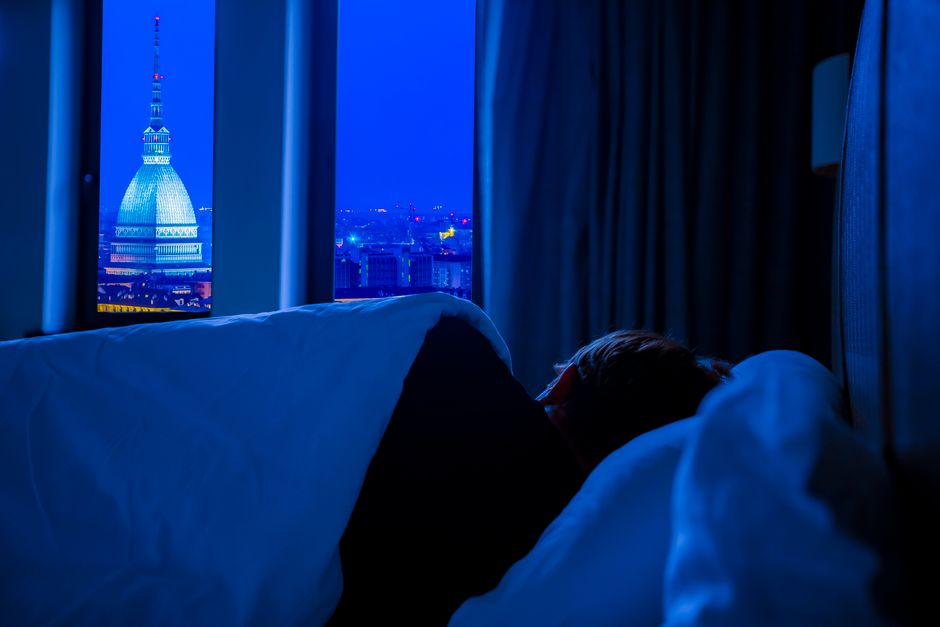
Blue-enriched light can be particularly effective at signalling daytime, which is why phones, tablets, laptops, and cool-white bulbs receive so much attention. But the simple story that one colour is solely responsible for bad sleep is too neat. Brightness, duration, timing, and what you are doing on the device all matter.
A dim phone used briefly is not the same as a bright tablet held near your face for two hours. Likewise, an exciting work message at midnight may keep you alert for reasons that have little to do with the pixels. Night mode can reduce blue tones, but it does not make a bright screen dark or a stressful conversation restful.
If screens seem to delay your sleep, lower their brightness, use the warm display setting, and move them farther from your eyes. You can also swap the last part of the evening for audio, paper, or something pleasantly dull. There is no medal for eliminating every wavelength before bed.
What colour light is best for sleeping?
If you need a night-light, a dim warm amber or red-toned light is usually less likely to feel alerting than a bright cool-white or blue-toned light. Yet colour is not a loophole. A blazing red LED strip is still a blazing light source.
Choose the lowest brightness that lets you move safely, place it below eye level, and aim it toward the floor rather than the bed. Motion-activated lighting can help for bathroom trips because it does not stay on all night, though you will want a gentle model rather than one that turns the corridor into a supermarket aisle.
For reading, use a small warm lamp directed at the page. If you share the bed, a narrow beam keeps the other side darker. That is a household negotiation with unusually good odds of success.
How morning light can support your sleep timing
Light is not only something to avoid. Bright light after you wake can help reinforce the difference between day and night, especially when your schedule tends to drift later. Outdoor light is often brighter than indoor light even on a cloudy day.
Open the curtains, sit near a bright window, or step outside after waking when your schedule allows. You do not need to stare at the sun, and you should not. A normal walk, coffee on the doorstep, or a few minutes tending to something outdoors is enough to make light part of your morning rather than another task.
If you sleep during the day after a night shift, the logic reverses with your schedule. Bright light on the journey home may make winding down harder, while darkness in the bedroom can protect the sleep window you actually have. Your clock may not fully adapt if shifts keep changing, so the aim is a workable signal, not perfect recalibration.

How to make your room darker
Start with the room rather than your willpower. You are not failing at bedtime because a streetlight reaches the pillow. That is an engineering problem in a small cardigan.
- Use lined or blackout curtains and extend them beyond the window frame where possible.
- Add removable side channels, hook-and-loop strips, or curtain clips where light leaks around the edges.
- Close the bedroom door or use a soft draft stopper to reduce hallway light.
- Turn glowing clocks away from the bed and cover nonessential indicator lights.
- Choose warm, dimmable lamps for the last hour before bed.
- Ask a reading partner to use a focused book light rather than an overhead lamp.
- Keep a low, warm night-light near the floor if you need to move safely.
Renters and travellers may need solutions that do not involve drilling into walls or explaining curtain hardware to hotel reception. Portable blackout panels, removable fabric, and clips can handle window gaps. A towel at the bottom of the door is not glamorous, but neither is being awake because the corridor resembles noon.
If the room cannot be changed, an eye covering can be the simpler option. The HushVeil sleep mask with built-in audio is one possibility when both light and a noisy environment are involved; as with any mask, fit varies by face shape, so some people may still notice light at the edges.
What if darkness makes you uneasy?
You do not have to force yourself into complete darkness. If a dark room increases anxiety or makes nighttime movement feel unsafe, keep a small warm light at floor level or leave the door slightly open. Feeling secure is part of having a sleep environment that works.
You can also reduce light in stages. Dim the main lights in the evening, switch to a smaller lamp at bedtime, then lower that lamp over several nights if you want to. Gradual is still a change.
Persistent trouble sleeping can have many causes beyond light. If sleep problems continue for weeks, affect your daytime functioning, or come with symptoms that worry you, consider speaking with a qualified healthcare professional. A darker curtain can help with a bright window; it cannot answer every sleep problem, nor should it be asked to.
A simple light plan for tonight
In the hour before bed, use fewer lamps and keep them warm and low. Reduce screen brightness if you keep using a device. When you get into bed, remove direct light from your line of sight and deal with the largest leak rather than conducting an audit of every glowing speck.
When you wake, bring light back in. Open the curtains or go outside when you can. The contrast is the useful part: dimmer before sleep, darker during sleep, brighter after waking.
You do not need a flawless cave or a complicated routine. You need a room that stops insisting it is daytime. Once it does, the rest of the evening can feel a little more like an exhale.


