

You cannot always prevent jet lag, but you can make the adjustment less abrupt. Shift your schedule a little before departure, use light and sleep according to destination time during the journey, then keep meals, movement and bedtime anchored to local time after you land.
Before the flight
Jet lag happens because your internal timing has not caught up with the clock on the wall. The NIH explains that body clocks run on roughly 24-hour cycles and are influenced by light, darkness and sleep schedules. Crossing several time zones asks that system to move faster than it normally would.
If your schedule allows, begin two or three days ahead. For eastward travel, move bedtime and wake time earlier in modest steps. For westward travel, move them later. Even a small shift can make the destination feel less like a sudden administrative error.
Protect the nights before departure rather than deliberately exhausting yourself in hopes of sleeping on the plane. Travel already brings early alarms, queues and missing charging cables. Starting tired gives you one more problem, not a clever shortcut.
During the flight
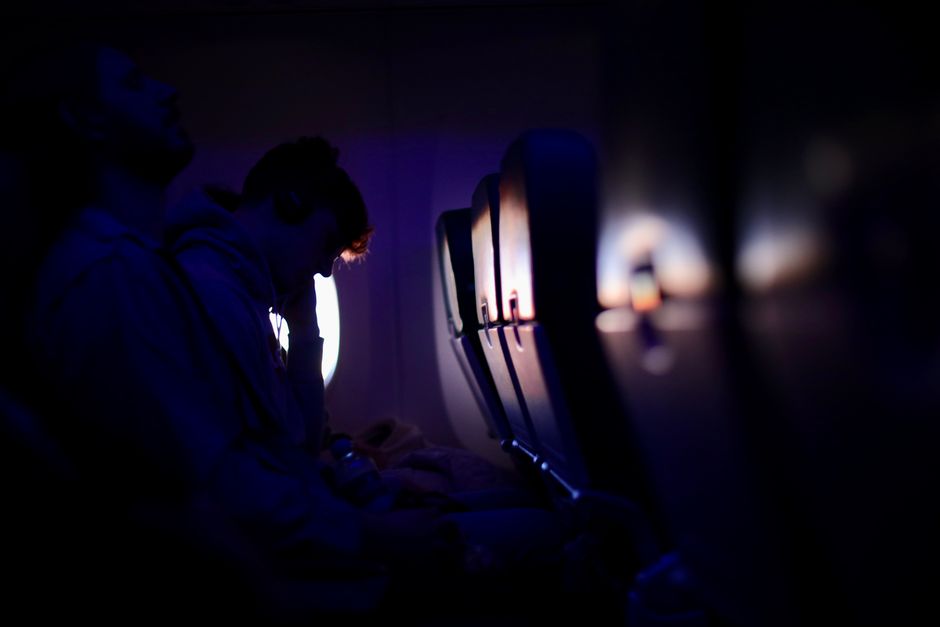
Change your watch to destination time after boarding. Plan one main rest window that overlaps with night at your destination, and use a mask, earplugs or quiet audio to reduce the cabin’s interruptions. If it is destination daytime, stay awake where practical.
Drink water when you are thirsty and go gently with alcohol. Alcohol may make you drowsy, but that is not the same as giving you settled sleep. Eat according to the flight service if you need to, but you do not have to treat every trolley appearance as a compulsory meal.
After you land
Local light is one of the clearest signals available. Spend time outdoors during the local day, particularly when you need to feel more awake, and make the evening dimmer when you need to settle. The exact timing can vary with direction, route and the person travelling, so broad consistency is more useful than pretending there is one perfect minute.
Keep meals and your main sleep on local time from the first day if you can. If you are barely functioning, a short nap may be more sensible than heroic misery, but set an alarm so it does not consume the afternoon and leave you awake through the local night.
Expect the first few days to feel uneven. You may wake early after flying east or become sleepy too soon after flying west. That is your timing catching up, not evidence that you have travelled incorrectly.
What not to overcomplicate
You do not need a spreadsheet covering every ray of light and mouthful of food. Focus first on the large signals: local daylight, local bedtime and a reasonably regular wake time. Those are easier to keep when baggage claim has already tested your patience.
If you have a health condition, take prescription medicines, are pregnant or are considering a sleep aid, ask a qualified clinician or pharmacist what is appropriate for you. Persistent or severe symptoms deserve individual guidance rather than another travel hack.
References
- National Heart, Lung, and Blood Institute, NIH. How Sleep Works.


