

To sleep on a long-haul flight, work with the destination’s night rather than simply sleeping whenever boredom arrives. Give your head and lower back some support, reduce light and noise, and accept that aeroplane sleep may come in scraps. A few decent stretches of rest still count.
Decide when you want to sleep
As soon as you board, set your phone to the destination time. If it is daytime there, stay awake for a while; if it is night, start making the seat feel less like row 42 and more like a place where resting is at least plausible.
This does not need military precision. The point is to avoid sleeping through the entire destination day and then arriving bright-eyed at midnight. On very long routes, choose one main sleep window and let shorter naps happen around it.
Make an economy seat less argumentative
Your body tends to slide, fold and develop opinions in an upright seat. Recline when permitted, place a small cushion or rolled layer behind your lower back, and use a neck pillow only if it actually keeps your head from dropping forward.
- Keep your seat belt visible over your blanket so crew do not need to wake you.
- Choose a window seat if you dislike being disturbed, or an aisle if easy movement matters more.
- Store essentials in the seat pocket before the cabin darkens.
- Wear loose layers so temperature changes are easy to manage.
Move around when you are awake and follow the airline’s safety instructions. Comfort is useful; wedging yourself into a complicated nest that blocks your movement is not.
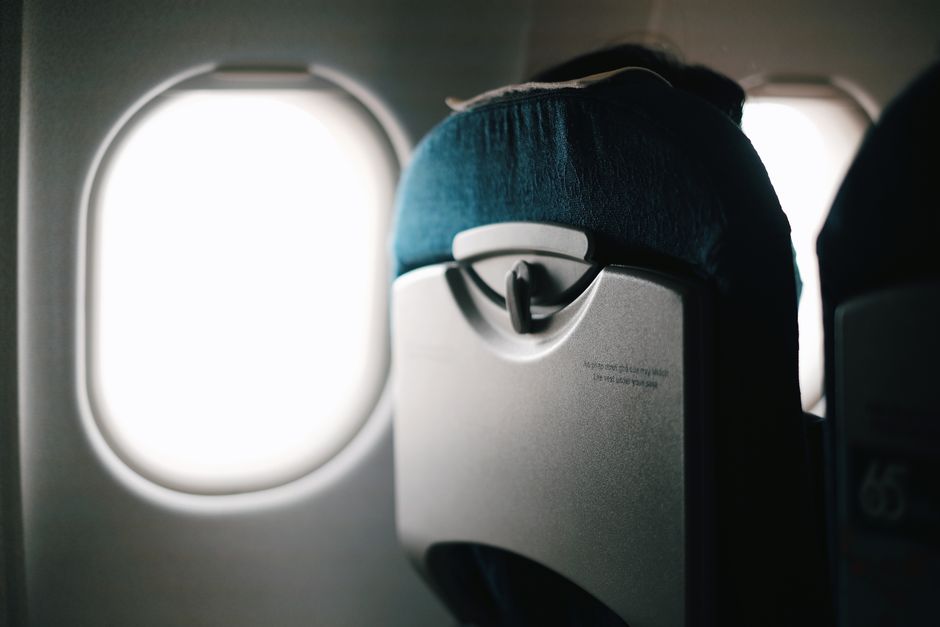
Control what reaches your seat
Cabins contain reading lights, glowing screens, announcements and the person nearby who has begun a twelve-film retrospective. An eye mask, earplugs or gentle audio can make your small patch of cabin more consistent even when the rest of it is not.
If you use audio, download it before boarding and set a sleep timer. Keep the volume low enough that you can still respond to crew instructions. A familiar audiobook or steady background sound usually asks less of your attention than a new thriller.
A sleep mask should feel secure without pressing on your eyes or leaving a mark. If you prefer light blocking and audio in one piece, the HushVeil sleep mask with built-in speakers is one option, though fit still varies from face to face.
Make the landing easier
When your planned sleep window ends, open the shade if allowed, drink some water and put your shoes back on before everyone else begins performing the same cramped ritual. A little movement and destination-time light can help mark the change from flight mode to local day.
Do not judge the attempt by whether you slept for eight uninterrupted hours. On a plane, the more realistic win is arriving somewhat rested, with your neck still speaking to you.


